How to Plan a Bathroom That Ages Well: Design for the Next 15 Years
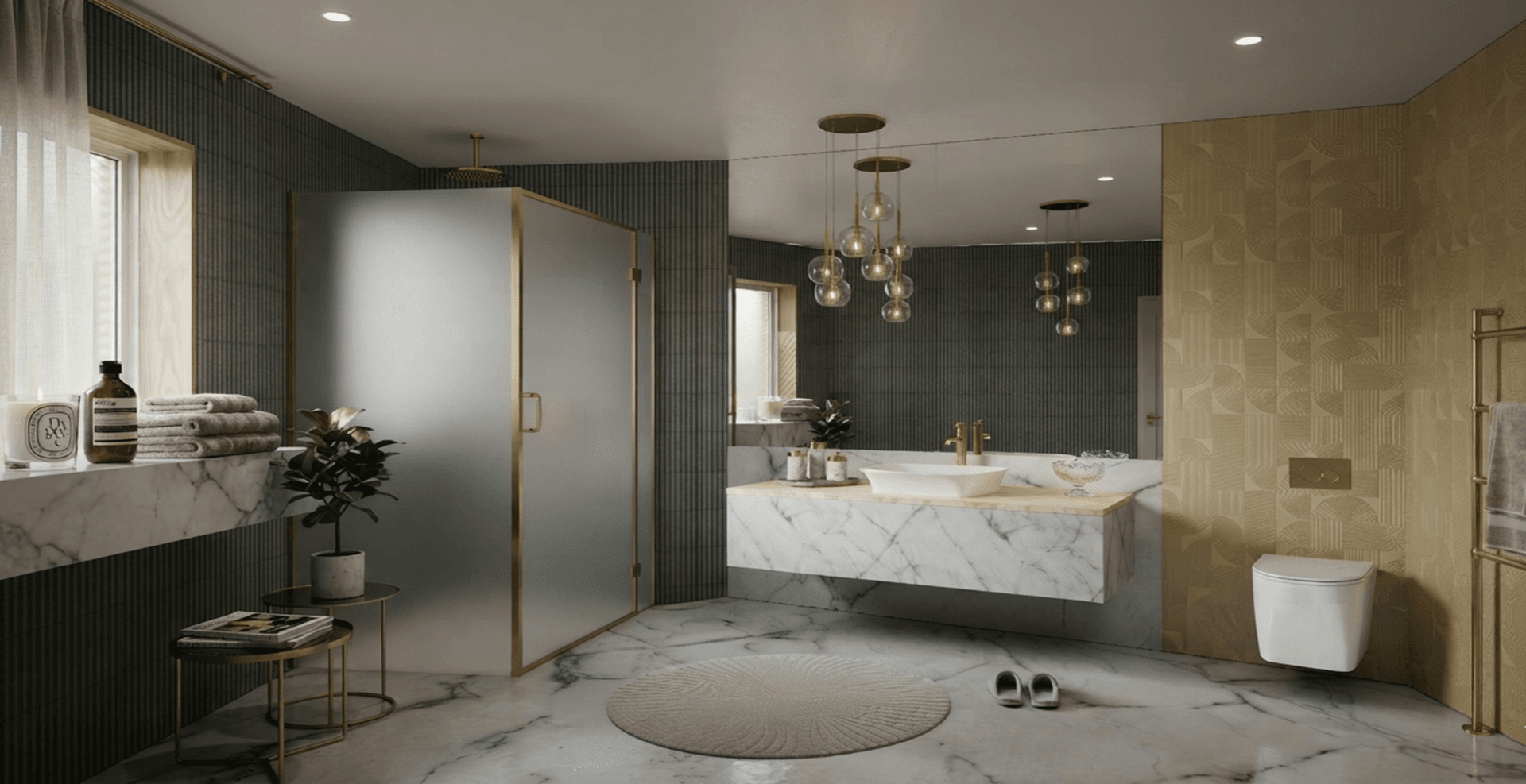
A bathroom renovation is one of the few interior decisions a homeowner makes only once or twice in a lifetime. Yet most are planned around what looks right today - this season's finish, this year's trend - rather than what will still feel right in fifteen. Planning a bathroom that ages well means treating it less like a decorating project and more like an investment: in materials that hold up, in a design language that doesn't date, and in fittings engineered to perform quietly for decades. This is the mindset behind lasting luxury, and it starts long before the first tile is chosen.
Why Most Bathroom Renovations Don't Age Well
The typical bathroom renovation fails not because of poor construction, but because of short-term thinking. Homeowners often select fixtures and finishes based on what's trending in that year's design magazines - a particular tap shape, a particular tile pattern - without asking whether the choice will still feel considered once the trend cycle moves on.
There's also a quieter, more structural reason bathrooms age badly: the gap between decorative finish and underlying build quality. A basin or faucet can look premium in a showroom and still fail within a few years if the materials beneath the surface - the valve mechanisms, the ceramic body, the plating - aren't built for daily use over a long horizon. Humidity, hard water, and constant handling are unforgiving conditions. A bathroom that ages well is one where the design decisions and the engineering decisions were made with the same fifteen-year horizon in mind, not just the day of installation.
Material Longevity: What to Look for Beneath the Finish
Longevity in a bathroom is decided mostly in places you can't see. Vitreous china sanitaryware, for instance, is fired at extremely high temperatures to create a dense, non-porous surface - this is what resists staining, hairline cracking, and the dulling that cheaper ceramic bodies show within a few years. When evaluating sanitaryware, it's worth asking about the firing process and glaze quality, not just the silhouette.
The same logic applies to faucets and fittings. Solid brass bodies with quality chrome or PVD (physical vapour deposition) plating resist corrosion and scratching far better than lighter-gauge alternatives, and ceramic disc cartridges - rather than rubber washers - are what keep a tap operating smoothly after years of daily use without drips or stiffness. These are unglamorous details, but they are the actual determinants of whether a bathroom still performs beautifully in year twelve, not just year one.
Finish choice matters too. Matte black and brushed finishes, when properly plated, tend to hide water spots and fingerprints better over time than high-polish chrome in hard-water regions - a practical consideration as much as an aesthetic one.
Design Philosophy That Doesn't Date
Trend-driven design ages in dog years. A bathroom built entirely around one moment's dominant colour, pattern, or silhouette starts to look dated the moment that moment passes. Design that ages well is built on proportion, restraint, and material honesty - principles that don't have an expiry date because they were never tied to a single era in the first place.
This is a deliberate philosophy, not an accident of taste. Clean geometric silhouettes, considered negative space, and a limited, cohesive material palette read as intentional in any decade. Collections such as Origami, built around simplicity and balance, or Ivana, with its thin-rim rectangular forms in white and matte black, are designed around this kind of restraint rather than a passing motif - which is precisely why pieces like these tend to still look considered years after installation, long after more literal, trend-driven pieces have started to feel of-their-moment.
The practical takeaway for anyone planning a renovation: choose form before finish, and choose proportion before pattern. Trends can be layered in through soft furnishings and accessories that are cheap to change. The fixed elements - basins, faucets, showers - should be the ones built to outlast the trend cycle entirely.
Engineering & Craftsmanship: The Hidden Factor in Longevity
Design and durability aren't separate conversations - the best-aging fixtures are the ones where form was engineered alongside function from the outset, not applied to it afterward. This is where design provenance becomes a genuinely practical signal, not just a marketing one.
Products developed in collaboration with Ettore Giordano, the Milan-based designer behind Senator's design language, illustrate this. His Visqua Wash Basin - winner of the Red Dot Design Award, one of the most rigorously judged international design accreditations - wasn't recognised for aesthetics alone. Red Dot's jury process evaluates functionality, ergonomics, and build quality alongside form, which is a meaningfully different bar than a piece simply looking good in a catalogue. The same design-and-engineering discipline runs through Cosmopolis and the Fluidique faucet range, both built around the idea that a fixture should perform as well in its tenth year as its first.
For anyone planning a long-horizon bathroom, this is a useful filter when comparing brands: has the piece been independently recognised for design merit by a body that evaluates more than appearance? It's a far more reliable signal of longevity than a spec sheet alone. You can see the full scope of this approach on the award-winning design collection.
Planning for Adaptability, Not Just Durability
A bathroom that ages well isn't static - it accommodates how a household's needs shift over fifteen years without requiring a full renovation to keep up. This is where planning discipline matters as much as product choice.
A few practical principles help future-proof a bathroom:
Plan plumbing generously. Concealed and modular shower systems make it easier to add features - a rain shower head, a hand shower, a body jet - later, without ripping out walls.
Choose wellness features with longevity in mind. Steam generators and spa systems, such as those in the wellness range, are increasingly seen less as indulgences and more as long-term additions to a home, since a well-installed steam or spa system tends to remain relevant regardless of shifting decor trends.
Favour modularity over fixed configurations. A basin and faucet chosen as interchangeable elements, rather than a permanently bonded unit, make it possible to refresh a look decades later without a full re-plumb.
Think about mobility and ease of use early. Wall-hung sanitaryware and lever-operated faucets aren't just design choices - they also make a bathroom easier to adapt for accessibility needs as a household ages, without looking institutional.
Adaptability planned in at the outset is dramatically cheaper than adaptability retrofitted later. It's a design conversation worth having with an architect or designer before any fixtures are chosen.
A Practical Checklist for a Fifteen-Year Bathroom
When evaluating fixtures and finishes for a renovation meant to last, a few questions consistently separate pieces that age well from ones that won't:
- Is the sanitaryware vitreous china, and has the manufacturer specified the firing standard?
- Are faucet bodies solid brass, with ceramic disc cartridges rather than rubber washers?
- Has the design been independently recognised - by bodies like Red Dot - for functionality, not appearance alone?
- Is the design language built on proportion and restraint, or tied to a specific, dateable trend?
- Can the plumbing and fixture layout accommodate future additions without demolition?
- Does the finish suit the local water hardness and daily-use conditions of the home?
Working through fixtures against this checklist - ideally with a designer or architect early in the planning process - tends to prevent the most common source of renovation regret: choosing beautifully for today and poorly for the next decade.
Frequently Asked Questions
Q: What's the single biggest mistake people make when renovating a bathroom for the long term?
A: Choosing finishes based on current trends rather than proportion and material quality. Trends can be updated cheaply through accessories; fixed fittings like basins and faucets should be chosen to outlast them.
Q: Does a higher price always mean a bathroom fixture will last longer?
A: Not automatically. Price should track to verifiable factors - vitreous china firing quality, solid brass bodies, ceramic disc cartridges, and independent design recognition - rather than price alone.
Q: How much should I budget for adaptability when planning plumbing?
A: There's no universal figure, but architects generally recommend over-specifying rough-in plumbing for showers and basins during construction, since retrofitting later is far costlier than planning capacity upfront.
Q: Are matte and brushed finishes more durable than polished chrome?
A: They tend to show water spots and fingerprints less in daily use, particularly in hard-water areas, though durability ultimately depends more on the plating process (such as PVD) than the finish colour itself.
Q: What does a Red Dot Design Award actually verify about a product?
A: It reflects an independent jury evaluation of functionality, ergonomics, and build quality alongside aesthetics - a broader and more rigorous bar than design appearance alone.
Conclusion
A bathroom built to age well is the product of decisions made months before installation, not choices made in a showroom on a single afternoon. The materials beneath the finish, the discipline behind the design language, and the plumbing capacity built in for the future all matter more than which tap looks best this season. Fixtures developed with that fifteen-year horizon in mind - vetted through independent design recognition and built on proportion rather than trend - tend to be the ones homeowners never feel the need to replace. Explore the full range of collections built on this philosophy, or visit a Senator Experience Centre to see the engineering and craftsmanship in person.


